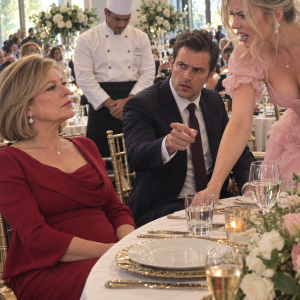
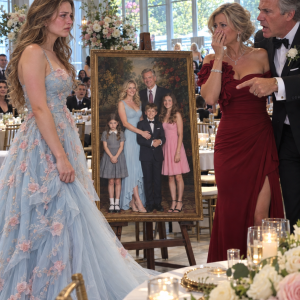
What I had not known was that Daniel had been helping pay to maintain it.
He explained that he had initially agreed to contribute a few hundred dollars a month, but over time, Walter had requested additional help for repairs, insurance, and other expenses.
Because Daniel’s salary could not comfortably support those payments, he had gradually reduced his contributions to our joint savings account and postponed several financial goals we had discussed as a couple.
I felt my stomach tighten.
There had been months when Daniel told me we should wait before replacing our aging car, and other times when he suggested postponing improvements to our kitchen because he wanted us to be careful with money.
I had assumed he was simply being practical.
“How much?” I asked quietly.
Daniel looked at me.
“Just over twenty-nine thousand dollars altogether.”
I lowered my eyes toward the table, trying to absorb the number without allowing my emotions to take over.
Walter shifted uncomfortably.
“Daniel, that was between us.”
“It was,” Daniel answered. “Until I realized that keeping it between us meant Claire was carrying expenses she never agreed to carry.”
He explained that the envelope contained copies of the transfers he had made, along with a recent statement showing that the house’s remaining financial obligations were now manageable.
Then he revealed something I had not expected.
Several weeks earlier, Walter had told him that the family needed to continue relying on my income for restaurant celebrations because, in his words, I could afford those things more easily than anyone else.
Daniel admitted that hearing his father describe my earnings as a family resource had finally forced him to confront how unfair the situation had become.
“I spent years thinking I was helping everyone by staying quiet,” he said, “but I was really asking my wife to absorb the consequences of decisions she knew nothing about.”
Margaret slowly turned toward her husband.
“You told me Daniel was helping with occasional repairs. You never said it was this much.”
Walter stared at the papers without answering.
For the first time all evening, Patricia seemed uncertain about what to say.
I had imagined that separating the restaurant checks might teach the family a lesson about taking advantage of someone’s kindness, but I had not expected to discover that the problem extended so deeply into our marriage.
And as I looked at Daniel, I realized that although he had finally spoken up for me, we would have an entirely different conversation when we got home.
Part Six: What Generosity Cannot Buy
The remainder of the dinner was quieter than any Whitaker gathering I could remember.
Robert eventually took out his credit card, Patricia studied her bill with visible frustration, and the other relatives paid their portions without further argument.
Margaret insisted on covering Walter’s dinner as her birthday gift to him, and when she thanked Emily for her patience, I noticed that her voice had grown unusually soft.
Nobody ordered another drink.
Nobody suggested extending the celebration somewhere else.
Outside, the evening air was cool, and the parking lot glowed beneath a row of old-fashioned lamps as Daniel and I walked toward our car.
For a while, neither of us spoke.
Then Daniel stopped beside the passenger door.
“I should have told you about the money years ago.”
I looked at him, remembering all the times I had questioned whether his family appreciated me and all the times he had reassured me that everything was fine.
“Yes, you should have.”
He nodded without trying to defend himself.
“I thought I was protecting Dad’s pride, and I kept telling myself I could handle it without affecting us. But it did affect us, and I let you believe our financial decisions were being made together when they weren’t.”
I wanted to be angry, and part of me certainly was, but beneath that anger was a deeper sadness that the person I trusted most had felt unable to be honest with me.
“Daniel, I never needed you to choose between me and your family,” I told him. “I needed you to understand that I’m part of your family, too.”
He looked down at the keys in his hand.
“I know that now.”
We drove home without turning on the radio, and when we reached our kitchen, we sat together at the table where we had made so many ordinary plans for our future.
That night, Daniel opened our financial records and showed me every payment he had made toward his parents’ house.
We discussed what had happened, how we would rebuild the savings we had postponed, and why neither of us could make significant financial commitments to relatives without speaking to the other first.
It was not a comfortable conversation, and it did not repair everything immediately, but it was the first time in years that I felt we were looking at the same problem instead of quietly standing on opposite sides of it.
Over the following weeks, Daniel spoke privately with his father and siblings.
He explained that we would no longer finance family restaurant gatherings, that any future assistance to his parents would require an honest discussion between us, and that our financial circumstances were not an invitation for anyone else to spend freely.
Some relatives accepted the change more gracefully than others.
Patricia barely spoke to me for several weeks, while Robert made a few remarks about how formal family dinners had suddenly become.
Margaret, however, called one afternoon and asked whether she could come over for coffee.
She arrived carrying a homemade lemon cake, and after we sat down, she reached across the table and took my hand.
“I owe you an apology, Claire. I saw how much you were doing for everyone, and I should have said something before it became an expectation.”
I felt my eyes grow warm.
“I never minded treating everyone once in a while. I just wanted to feel like I mattered even when I wasn’t paying.”
Margaret squeezed my fingers.
“You do matter, sweetheart. And I’m sorry we made you question that.”
Her words did not erase the past, but they helped me believe that something better might still grow from it.
Three months later, the family gathered again, this time at a casual neighborhood restaurant where everyone understood in advance that they would pay for their own meals.
There were no extravagant bottles of wine, no enormous seafood platters ordered simply because someone else might be paying, and no jokes about my credit card.
Instead, people shared stories, passed around photographs, and enjoyed the kind of uncomplicated evening I had loved when I first joined the family.
At the end of dinner, Robert reached for his check and surprised me by smiling.
“You know, this really isn’t so complicated after all.”
I smiled back.
“It never had to be.”
Daniel slipped his hand into mine beneath the table, and although our marriage was still recovering from the things we had finally brought into the open, I felt grateful that we were learning how to stand beside each other rather than hiding difficult truths in the name of keeping everyone comfortable.
I still believe in generosity, perhaps even more strongly than I did before, because I understand now that kindness is most meaningful when it is freely given and genuinely appreciated.
What I no longer believe is that love requires someone to surrender their boundaries, overlook repeated disrespect, or quietly accept responsibilities that were never theirs to begin with.
For years, I thought paying the bill was the price of belonging to Daniel’s family.
It took one uncomfortable birthday dinner to teach me that a family worth belonging to should never make you purchase your place at the table.