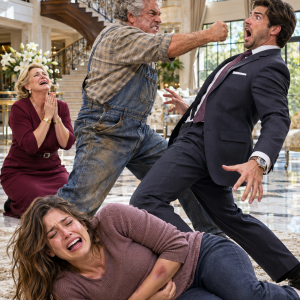
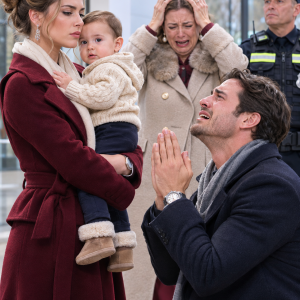
Rebecca cried quietly.
Matthew appeared overwhelmed.
After reviewing the evidence, the court dismissed the petition.
The judge also addressed the costs associated with the proceedings and ordered Andrew to bear specified court expenses.
My home remained mine, and I retained control over my decisions.
Outside the courtroom, Andrew approached me.
“Mom, I convinced myself that everything would work out if we could access the value of the house, and I stopped thinking about what you actually wanted.”
Rebecca apologized for allowing her financial desperation to influence her judgment.
Matthew admitted he’d followed his older siblings because he was frightened of losing his truck and falling further behind in school.
I listened to them.
Then I explained that apologies couldn’t immediately restore trust.
“I spent my life making sure you had opportunities, but being your mother doesn’t mean I must surrender my security whenever your decisions become difficult.”
They accepted that rebuilding our relationship would require time.
Daniel stood nearby without interfering.
After the hearing, he walked beside me toward the courthouse entrance.
“You protected my dignity when I was a child, Eleanor. I’m grateful I could help you protect yours when you needed someone.”
I squeezed his hand.
I finally understood that his greatest gift wasn’t money or influence.
It was remembering the value of a kindness I’d nearly forgotten.
Part 7 — The Yellow Tickets That Became My New Purpose

My recovery continued over the following months, supported by medical appointments, cardiac rehabilitation, and the quiet companionship of friends who never made me feel burdensome.
Helen helped with errands whenever I requested assistance.
Daniel visited occasionally, bringing stories about the charitable programs operating across his medical facilities.
One afternoon, he invited me to tour a family assistance center within the hospital.
The facility provided meals, temporary supplies, and practical support to children accompanying relatives receiving treatment.
I watched a little girl accept a warm lunch from a volunteer.
Something about the moment brought back the frightened boy I’d met at Jefferson Elementary School.
Daniel noticed my expression.
“Would you consider helping us lead the children’s meal program, Eleanor? Your experience working in schools would be invaluable to the families we serve.”
I was surprised.
I’d retired from my public school position and hadn’t imagined beginning another professional chapter after heart surgery.
But the opportunity appealed to something deeply familiar.
I accepted the role of program director, working with staff and volunteers to organize food distribution, coordinate donations, and ensure families could receive assistance without embarrassment.
We introduced small yellow meal vouchers inspired by the ticket Daniel had preserved for forty-six years.
I insisted that every child be treated with dignity.
No family needed to explain their hardship in front of strangers.
Daniel also reviewed the hospital’s parking arrangements.
After studying the financial implications, his organization introduced free parking for visiting family members.
The change couldn’t repair what my children had done.
But it removed one obstacle that sometimes made staying beside a hospitalized loved one unnecessarily difficult.
Meanwhile, I established clearer boundaries with my family.
Andrew began making regular payments toward the money he’d borrowed.
Rebecca started taking the bus to visit me on Sundays, often bringing homemade food rather than asking for financial assistance.
Matthew continued working toward his college degree and called frequently to tell me about his progress.
I didn’t pretend the betrayal had disappeared.
Trust returned slowly, through consistent behavior rather than emotional promises.
One afternoon, Rebecca helped me prepare dinner in my kitchen.
She looked around the room where she’d spent much of her childhood.
“I was so frightened of losing everything, Mom, that I nearly helped take away the place where you always made us feel safe.”
I embraced her.
For the first time in months, I believed she understood what she’d nearly destroyed.
Part 8 — Forty-Six Years Later, Kindness Found Its Way Home
Nearly a year after my surgery, spring returned to Portland.
The cherry tree beside my porch was covered in pale pink blossoms, and sunlight filled the living room where I’d once wondered whether I would ever feel secure again.
My home remained exactly where it had always been.
The bookshelves, family photographs, and old wooden dining table were still mine.
Yet the woman living there had changed.
I no longer measured my value by how much money I could give my children or how many of their problems I could solve.
I loved them deeply.
But I had learned that love without boundaries could become an invitation for others to treat sacrifice as an obligation.
That afternoon, Daniel visited after finishing a meeting at the hospital.
He brought a framed photograph from the children’s meal program.
In the picture, I was handing a yellow voucher to a little boy while his mother smiled beside him.
Daniel placed the photograph on my table.
“I wanted you to see what you’ve helped create, Eleanor, because hundreds of families now receive assistance through a program inspired by your kindness.”
I looked at the photograph for a long time.
Then I asked whether he still kept the original lunch ticket.
He smiled and opened his wallet.
Inside a protective sleeve was the same worn yellow cardboard ticket he’d shown me in my hospital room.
“I’ve carried it for forty-six years, Eleanor, and I intend to keep it for the rest of my life.”
I shook my head, overwhelmed.
“I never imagined something so small could matter for so long, Daniel. I was only trying to make sure a hungry little boy had lunch.”
He took my hand.
“That’s precisely why it mattered. You helped me when there was nothing you expected to receive in return.”
After he left, I settled into the porch swing beneath the flowering cherry tree.
I thought about my husband, James, and how proud he’d been whenever I helped someone who needed encouragement.
I thought about my children, their mistakes, and the difficult work still required to rebuild our relationships.
Most of all, I remembered the quiet ten-year-old boy who’d once stood outside a school cafeteria, too embarrassed to admit he couldn’t afford lunch.
I’d given him forty cents’ worth of food.
Forty-six years later, he’d helped me keep my home, my independence, and my dignity.
I once believed the greatest legacy of my life would be the three children I raised alone, but I eventually discovered that a single act of compassion could grow into something extraordinary, returning to protect me when the people I loved most had forgotten how to care.
THE END