PART 1 — THE RING MY GRANDMOTHER PROMISED ME
The most precious piece of jewelry my grandmother ever owned was a modest diamond engagement ring that my grandfather purchased in 1956.
Its tiny quarter-carat diamond rested on a delicate yellow-gold band decorated with intricately engraved roses.
My grandfather, Henry Ellis, had saved eleven months of wages from his job at a Pennsylvania steel mill to purchase it.
Grandma Evelyn wore that ring every day for fifty-eight years, including the final afternoon we spent together.
When I was seven, I often sat beside her, tracing those miniature roses with my fingertips.
“One day, this ring will belong to you, Nora, because you’ve always understood why it matters to me.”
I asked why she had chosen me instead of my older sister, Vanessa.
Grandma smiled and gently turned the ring toward the sunlight.
“Your sister admires the diamond because it sparkles, sweetheart, but you love this ring because it carries our family’s story.”
I remembered those words long after her death.
When Grandma passed away during my twenty-first year, her will specifically left the ring to me.
My sister never forgave that decision.
My name is Nora Ellis, and at thirty, I was working as a pediatric physician at a children’s hospital in Cleveland, Ohio.
I had been married for three years to a wonderful man named Daniel, and we were expecting our first child, a daughter, in approximately two months.
From the outside, my life appeared remarkably peaceful.
However, the ring my grandmother had entrusted to me had disappeared five years earlier, along with the man I had once planned to marry.
Both had ended up with Vanessa.
For five years, I’d tried to convince myself that losing them had taught me everything I needed to know about betrayal.
Then my mother invited us to her sixty-fifth birthday dinner, and Vanessa decided to try the same trick again.
PART 2 — THE SISTER WHO ALWAYS NEEDED EVERYTHING I HAD
Vanessa was two years older than me, and throughout childhood, everyone seemed determined to remind us how different we were.
She inherited our mother’s blonde hair, striking blue eyes, and effortless confidence.
I inherited brown hair, an awkward collection of glasses and braces, and an almost obsessive interest in science.
Our father drove delivery trucks for a regional bakery, while our mother, Diane, worked as a receptionist at a dental clinic.
We grew up in a modest brick house in Lancaster, Pennsylvania.
Vanessa became the popular daughter, collecting beauty-pageant ribbons, homecoming invitations, and attention wherever she went.
I became the dependable daughter who earned excellent grades and rarely complained.
Whenever something wonderful happened to me, Vanessa somehow found a way to redirect everyone’s attention.
During my seventh-grade science competition, she fainted in the gymnasium shortly after the judges announced I’d won first place.
The school nurse determined that she’d simply skipped breakfast, but nobody remembered my award afterward.
Years later, when I received a full scholarship to Pennsylvania State University, Vanessa announced an engagement to someone she’d been dating for three weeks.
The engagement ended a month later.
Our family talked about that breakup far longer than they celebrated my scholarship.
When I was nineteen, Vanessa began flirting with my first serious boyfriend, a quiet chemistry student named Andrew.
He ended our relationship two weeks afterward, claiming he wanted someone more adventurous.
My mother dismissed my concerns immediately.
“Vanessa is naturally affectionate, Nora, and you shouldn’t assume she’s deliberately trying to hurt you.”
That explanation became the defining refrain of my childhood.
Vanessa never intended harm, according to our mother, even when her behavior repeatedly caused it.
I eventually stopped expecting Diane to defend me.
Instead, I focused on medical school, determined to build a life where my achievements belonged to me.
Unfortunately, I hadn’t yet understood how much my sister resented anything she couldn’t claim for herself.
PART 3 — THE FIANCÉ WHO TOOK MY GRANDMOTHER’S RING
I met Grant Mercer during my first year of medical school in Cleveland.
He was a second-year law student, charming and funny, with an easy confidence that made even exhausting study sessions enjoyable.
We began dating after spending an entire night studying at the same coffee shop.
For four years, Grant supported me through difficult examinations, demanding clinical rotations, and the emotional realities of medical training.
He brought coffee when I couldn’t leave the library and comforted me after my first young patient died from leukemia.
When he proposed during my final year, neither of us had money to spare.
Grant was working as a judicial law clerk, earning approximately thirty-eight thousand dollars annually.
My financial situation consisted largely of student loans and whatever groceries I could afford between rotations.
One evening, he admitted that purchasing a proper engagement ring would require several more years of saving.
I opened my jewelry box and brought him Grandma Evelyn’s ring.
“Use this one, Grant, because Grandma always wanted me to wear it when I found someone I truly loved.”
He hesitated, recognizing its sentimental importance.
“Are you certain, Nora? Your grandmother trusted you with something that can never be replaced.”
I told him I was certain.
He knelt beside our tiny kitchen table and proposed again, slipping the engraved gold band onto my finger.
We scheduled our wedding for June seventeenth at the Lancaster church where my grandparents had married.
I asked Vanessa to be my maid of honor.
That decision remains one of my greatest regrets.
During my final medical-school examinations in April, Vanessa visited our apartment for a week, supposedly to help organize wedding arrangements.
I spent sixteen hours each day studying, leaving Grant and Vanessa alone for long stretches.
They went out to dinner twice, explaining that they were planning surprises for the ceremony.
I trusted both of them.
On the evening I completed my final examination, I returned home carrying an inexpensive bottle of champagne.
Grant sat silently at the kitchen table.
“Nora, I’ve been thinking about our future, and I don’t believe we should get married anymore.”
I couldn’t understand what I was hearing.
He explained that we’d grown apart, although he couldn’t identify anything that had actually changed.
When I asked whether another woman was involved, he refused to answer.
That silence told me enough.
Before leaving with two suitcases, he extended his hand.
“I need the engagement ring back, Nora, because I don’t think keeping it would be appropriate now.”
Exhausted and devastated, I removed Grandma’s ring and placed it in his palm.
I didn’t understand until much later that he had no rightful reason to keep my inheritance.
Three weeks afterward, Vanessa posted a photograph of herself holding Grant’s hand at a Philadelphia restaurant.
Their caption announced a wonderful new beginning.
When I called Diane, she admitted she’d already heard about the relationship.
“Sometimes feelings change unexpectedly, Nora, and you cannot treat people as possessions simply because they once loved you.”
I reminded her that Vanessa had agreed to stand beside me at my wedding.
Mother replied that the situation was complicated.
Eight months later, Vanessa married Grant at an extravagant Philadelphia hotel reception attended by two hundred guests.
I wasn’t invited.
Nevertheless, she sent me a wedding photograph from an unfamiliar telephone number.
There, beneath an archway covered with white roses, Vanessa stood proudly beside Grant.
On her left hand was Grandma Evelyn’s engagement ring.
I recognized every engraved petal.
That night, I cried in a hospital stairwell until an older nurse named Joan found me and sat quietly beside me.
When I confronted Diane, she said Grant had given Vanessa the ring and that I should let the matter go.
I stopped speaking to my sister and former fiancé.
For five years, I never contacted either of them again.
PART 4 — THE MAN WHO HELPED ME TRUST AGAIN
One year after Grant abandoned me, I met Daniel Bennett during an overnight shift at the children’s hospital where I was completing my pediatric residency.
Daniel taught chemistry at a local high school and coached its robotics team.
He’d accompanied a fifteen-year-old student to the emergency department after a car accident on the way home from a robotics competition.
The boy had suffered a broken arm and a mild concussion.
His parents were traveling, so Daniel remained at the hospital for six hours until they arrived.
When I explained that the student would recover, Daniel covered his face with both hands and whispered a grateful prayer.
Related Posts
I Had Just Broken the Padlock on My 10-Year-Old Son’s Kennel When He Clutched My Neck and Begged Me Not to Look at the Black Bags Beneath the Pool Water—Then He Whispered, “Mom Tried to Stop Him,” and a Car Door Shut Behind Me
I Caught My Mother Hiding in the Kitchen Pantry, Eating Chocolate She’d Been Keeping Secret From the Family. When She Saw Me, She Whispered, “If You Tell Your Father, You’ll Regret It.” I Thought It Was Just Another One of Mom’s Funny Little Secrets. But When My Teacher Asked Me to Write About Her, I Started Paying Attention—and Discovered Something About My Mother That Nobody in Our Family Had Noticed—and It Wasn’t About the Chocolate.
“YOUR WIFE IS LOSING HER MIND, ADRIAN. SHE NEEDS PSYCHIATRIC TREATMENT BEFORE SHE HURTS THE BABY!” My Mother Warned Me As I Drove Home To My Wife, Who Was Twenty-Eight Weeks Pregnant. For Weeks, She’d Insisted Natalie Was Unstable And Hiding Something. But When I Entered Our Bedroom, I Found My Wife Curled Beneath A Blanket, Trembling In Her Sleep. I Gently Pulled The Blanket Aside And Discovered Extensive Bruises Across Both Legs And A Strange Circu:lar Bu:rn Near Her Ankle. Then My Mother Appeared In The Doorway, And Her First Words Made My Blood Run Cold…
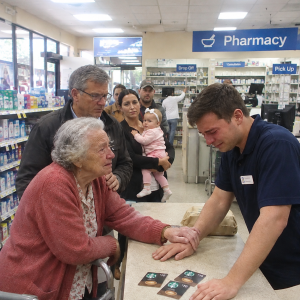
My 85-Year-Old Mother Held Up an Entire Pharmacy Line Over Three $10 Coffee Cards. I Was So Embarrassed I Finally Whispered, “Mom, Please. You’re Making Everyone Wait.” She Looked at Me and Said, “Linda, There’s Something You Don’t Understand.” I Thought She Was Just Being Stubborn—Until I Saw What She’d Written on a Little Piece of Paper.