Part 1: The Sunday Afternoon That Changed Everything
“That girl needs to learn some discipline! Nobody in this family gets to scream for their mother whenever things don’t go their way!”
The angry voice belonged to my former brother-in-law, Russell Hayes, and I heard it the moment I stepped inside my ex-husband’s house.
My seven-year-old daughter was curled beside the stone fireplace, holding one trembling hand against her injured face.
There was blood on her unicorn T-shirt, and the position of her jaw immediately told me something was seriously wrong.
My name is Allison Carter, and at thirty-nine, I had spent fifteen years working in county search-and-rescue and emergency response.
I had pulled injured hikers from dangerous mountain trails, helped evacuate motorists during winter storms, and witnessed emergencies that remained with me long after my shifts ended.
Yet nothing in my professional experience prepared me for discovering that my daughter had been seriously injured inside her father’s home.
“Mommy, I’m sorry. I promise I won’t cry anymore, and I’ll be good.”
Those were the first words Emma managed when she recognized me.
Her father, Christopher Hayes, stood nearby holding his iPhone.
Russell remained beside the fireplace, breathing heavily.
Several relatives had gathered for their usual Sunday football barbecue, and their expressions ranged from discomfort to outright irritation.
“She slipped and hit the fireplace,” somebody announced.
Another relative claimed Emma had become hysterical over a minor disagreement.
Christopher’s mother, Diane, folded her arms.
“Allison, don’t come into this house acting as though everyone here is a criminal. Children need boundaries.”
I ignored them and knelt beside my daughter.
“Emma, sweetheart, I’m here now. Tell me where you’re hurting, and we’ll get you somewhere safe.”
She recoiled when I gently approached her shoulder.
I immediately stopped moving.
The reaction was unmistakable.
My little girl wasn’t merely frightened of the injury.
She was frightened of what another adult might do if she expressed pain.
Thirty minutes earlier, I had been preparing dinner at my house in Tacoma, Washington, when Christopher’s youngest brother called.
Owen Hayes was twenty-two and had never sounded so terrified.
“Allison, please come get Emma. Russell hit her, and she struck her face against the fireplace.”
I asked whether anyone had called emergency services.
Owen explained that Christopher had forbidden him from doing so.
“She’s bleeding, Allison, and her jaw looks wrong. Christopher says we have to deal with everything ourselves.”
I immediately called emergency dispatch for guidance and told them about a seriously injured child who might be prevented from receiving medical care.
Then I left for Christopher’s home in Bellevue.
During the drive, I repeatedly attempted to contact him.
Four calls went unanswered.
Christopher and I had divorced two years earlier.
Our custody arrangement provided equal parenting time, something I initially believed would help Emma preserve a loving relationship with both parents.
Recently, however, she had become increasingly withdrawn after weekends at her father’s house.
She told me Russell called her weak whenever she cried.
Diane regularly warned that children who embarrassed their fathers deserved consequences.
Whenever I raised concerns through our parenting communication application, Christopher accused me of encouraging emotional dependency.
I had documented those conversations.
But I hadn’t understood how dangerous the situation had become.
Now, as Emma trembled beside the fireplace, every warning returned with devastating clarity.
Part 2: The Family That Blocked My Car
I carefully supported Emma while helping her stand, avoiding unnecessary movement around her injured jaw and neck.
She cried quietly against me.
“We’re going to the hospital, sweetheart, and you don’t need permission from anyone here to get help.”
Christopher immediately stepped into our path.
“Wait a minute, Allison. We need to agree on what happened before you take her anywhere.”
I stared at him.
“Your daughter needs emergency medical treatment, Christopher. Move out of the doorway.”
Russell gave a contemptuous laugh.
“American children are spoiled because parents panic over every little punishment. She needed to learn respect.”
I didn’t answer him.
I concentrated on getting Emma outside safely.
Owen followed us, repeatedly offering to help.
As I approached my SUV, Christopher demanded that I return inside.
Instead, I secured Emma carefully in her car seat, taking precautions not to worsen her injury.
She held my hand briefly before I closed the door.
“Mommy, please don’t let Uncle Russell get angry again.”
I promised she would not be returning to the house that evening.
Then I turned toward the driver’s door.
Christopher stood directly in front of it.
Russell had positioned himself near the hood, while Diane and several relatives blocked the driveway.
Nearly ten adults surrounded my vehicle.
“Nobody leaves until we settle this privately,” Christopher announced.
I looked from one face to another.
“My daughter has a serious facial injury, and you’re deliberately preventing me from taking her to a hospital.”
Christopher folded his arms.
“The hospital will report this to the police, Allison, and I won’t let you destroy my family’s reputation over something Russell didn’t mean to do.”
For a moment, I felt overwhelming anger.
Then fifteen years of emergency-response training helped me focus on the immediate danger.
I reached into my jacket, retrieved my county emergency-response identification, and held it where Christopher could see it.
“I’ve worked alongside emergency personnel and investigators for fifteen years, Christopher, and I know what happens when adults interfere with urgent medical care.”
He looked away.
I pointed toward the security camera mounted above his garage.
Its indicator light was illuminated.
“Your camera is recording this driveway, and there are multiple witnesses watching you obstruct access to an injured child.”
Diane started protesting.
“We’re still family, Allison. Surely we can discuss this without bringing outsiders into our business.”
I answered without raising my voice.
“A child needing medical treatment is not a private family dispute, Diane, and protecting someone’s reputation cannot come before her safety.”
I told them that emergency services had already been contacted and that I would report the obstruction.
I didn’t pretend my work identification gave me arrest powers.
It didn’t.
But my training had taught me to document what happened, summon the proper authorities, and avoid wasting time arguing with people who were obstructing help.
Owen finally stepped forward.
“Christopher, she’s seven years old, and she needs a doctor. I’m not helping you keep her here.”
He moved toward the driveway and gestured for the others to step aside.
Two relatives backed away.
Diane lowered her arms.
Christopher glanced nervously at the security camera.
Finally, he stepped away from my door.
I climbed into the SUV, locked the doors, and left without looking back.
Once we reached a safe location, I followed the dispatcher’s instructions and arranged for emergency medical assistance.
During the journey, Emma whispered something that nearly broke me.
“Mommy, are you angry because I cried and asked to come home?”
I reached back as far as I safely could.
“I’m not angry with you, Emma. You’re allowed to cry, you’re allowed to miss me, and nobody has the right to hurt you because of either.”
She didn’t answer.
But her small fingers remained wrapped around mine until the medical team took over.
Part 3: The Evidence Nobody Could Explain Away

At Seattle Children’s Hospital, the emergency team quickly assessed Emma’s injuries.
A physician ordered urgent imaging after noticing significant swelling, an abnormal bite, and difficulty moving her jaw.
The scans confirmed a complicated fracture of the left mandible, accompanied by substantial displacement and an injury inside her mouth.
Emma needed surgery to stabilize the fracture.
The maxillofacial surgeon explained the proposed procedure carefully, including the use of small titanium plates and screws.
I listened while struggling to comprehend that my daughter had been hurt badly enough to require an operation.
Then the physician asked how the injury had occurred.
I described Owen’s call, the scene at Christopher’s house, and the family’s attempt to block our departure.
“The injury is consistent with significant blunt-force trauma, and we’re required to report suspected child abuse to the appropriate authorities.”
I nodded.
“Please document everything you find. I’ll cooperate fully with the investigation and provide the messages I’ve already saved.”
While Emma was prepared for surgery, I contacted my attorney, Rachel Bennett.
Rachel practiced family law and had assisted with our original custody agreement.
She immediately began preparing a request for emergency protective relief and temporary custody orders.
“We need to prioritize Emma’s safety and preserve every piece of available evidence, including communication records and witness statements.”
She advised me not to respond emotionally to Christopher’s messages.
The first arrived while I sat outside the operating suite.
You’re taking this too far.
The second claimed Russell had reacted instinctively because he was a former military serviceman experiencing psychological difficulties.
A third warned that involving authorities would destroy Emma’s future.
Diane sent another message invoking family loyalty and forgiveness.
None of them asked whether Emma was safely out of surgery.
I saved everything.
Early the following morning, Owen appeared at the hospital carrying Emma’s favorite stuffed fox.
His face looked exhausted.
“I spoke to the detectives last night, Allison, and I told them everything that happened.”
I thanked him.
Then I asked what had occurred before Russell struck Emma.
Owen stared at the floor.
Related Posts

“You Gave Away My Vacation, Volunteered My Time, Planned To Spend My Money, And Even Discussed Moving Your Sister Into My House Without Asking Me.” I Said As I Picked Up My Bag And Walked Away. Behind Me, My Husband And His Family Kept Shouting. For The First Time In Six Years, I Didn’t Stop To Make Them Comfortable.
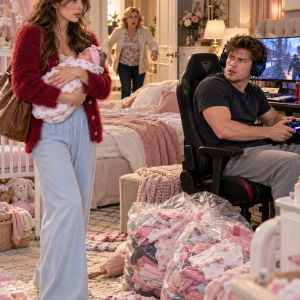
“YOUR BABY DOESN’T NEED A BEDROOM. MY SON DOES!” My Mother Snapped While I Was In Labor. Two Days Later, I Came Home With My Newborn Daughter To Find Her Crib Dumped In The Garage And My 31-Year-Old Brother Living In Her Nursery. When I Demanded An Explanation, Mom Smirked, “YOU DON’T GET TO BE SELFISH NOW. DON’T MAKE A SCENE.” I Didn’t Argue. I Picked Up My Phone And Made One Call. Minutes Later, Our Attorney Walked In Carrying A Blue Folder. My Brother Recognized It Immediately—And Suddenly, He Wasn’t Smiling Anymore.

“DON’T COME TO MY OFFICE TONIGHT. I’M WORKING LATE,” My Husband Texted. After 12 Years Of Marriage, I Thought He Was Just Exhausted, So I Brought Him Homemade Soup. But When I Opened His Office Door, I Found His Young Assistant Curled Up Against His Chest, His Shirt Unbuttoned, And His Arm Wrapped Tightly Around Her Waist. Even In His Sleep, He Pulled Her Closer And Kissed Her Hair. I Didn’t Scream. I Took One Photo, Left The Soup Outside, And Texted, “DON’T COME HOME.” Minutes Later, He Called 11 Times, Then Sent A Message That Made My Stomach Drop: “PLEASE, WHATEVER YOU THINK YOU SAW, DON’T TALK TO MY ASSISTANT.” I Stared At Those Words. Why Was My Husband More Afraid Of What She Might Tell Me Than Of Losing His Wife?
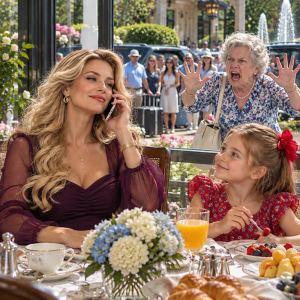
“LEAVE YOUR KIDS AT HOME! MY CHILDREN DON’T WANT YOUR BR@TS RUINING THE REUNION!” My Sister Snapped, And My Mother Backed Her Up—Even Though I’d Paid $17,000 For The Country Club. I Simply Replied, “NO PROBLEM,” And Canceled The Reservation. On Saturday, 123 Relatives Arrived To Find The Doors Locked. My Sister Called Screaming, But Grandma Grabbed Her Phone And Whispered, “JILL, CHECK YOUR BUSINESS BANK ACCOUNT. RIGHT NOW.” When I Opened The $286,450 Transfer Request, I Saw My Father’s Name—And A Company I’d Never Heard Of.