The Day My Father Refused to Walk Me Down the Aisle, Thirty Veterans Arrived for the Man He Called Worthless

Part One: The Empty Place Beside Me
On the morning of my wedding, my father informed me that he would rather sit among the guests than walk beside a daughter who had chosen to marry a man he considered beneath our family, and although I had spent most of my life preparing myself for his disappointment, nothing could have prepared me for hearing those words while standing in my wedding gown.
My name is Caroline Whitmore, and until that Saturday in early June, I had believed that the most difficult part of marrying Andrew Bennett would be convincing my father that a man’s character mattered more than the amount of money he earned.
I was thirty-one, working as a landscape designer in a quiet Virginia community outside Richmond, and Andrew was a legal aid attorney whose days were spent helping people who could barely afford groceries, much less the services of an experienced lawyer.
We had met two years earlier at a community fundraiser, where I had been arranging flowers for the reception and he had arrived late because an elderly client needed help understanding a notice about her housing assistance. While the other guests discussed vacation homes and investment portfolios, Andrew spent most of the evening helping volunteers carry folding chairs to the storage room.
I remember thinking that he was the first man I had met in years who seemed entirely comfortable being overlooked.
My father, Richard Whitmore, possessed no such quality.
He owned several commercial properties and a successful regional construction business, and throughout my childhood, our family attended charity dinners where his name appeared on enormous banners and people praised him for his generosity.
His favorite organization was the Patriot Heritage Foundation, a nonprofit he had established to support military families, preserve historical memorabilia, and fund rehabilitation programs for former service members.
I had grown up watching veterans shake his hand, grateful spouses embrace my mother, and local newspapers describe him as one of the community’s most respected benefactors.
For a long time, I believed every word.
When I introduced Andrew to my parents, my mother welcomed him warmly, but my father spent dinner asking questions about his salary, his apartment, and whether he intended to pursue a more profitable career.
Andrew answered without embarrassment, explaining that he enjoyed his work and believed people deserved decent legal representation regardless of their circumstances.
My father smiled politely until Andrew left, then turned toward me with an expression I had known since childhood.
“Sweetheart, you can do considerably better than a man who spends his life helping people who can’t pay him.”
I told him Andrew was kind, intelligent, and dependable, but my father dismissed those qualities as though they were consolation prizes for someone who had failed to become successful.
Over the following months, his criticism grew more personal, especially after Andrew proposed with a modest antique ring that had belonged to his grandmother.
My father examined it over Sunday dinner and remarked that he supposed sentiment was useful when a man couldn’t afford anything impressive.
Andrew merely smiled and continued helping my mother clear the table.
That quiet dignity made me love him more, although I sometimes wished he would defend himself, if only to remind my father that patience was not weakness.
Three days before the wedding, Dad called and offered to purchase a larger house for us, provided Andrew agreed to leave legal aid and accept a management position at one of his companies.
When I refused, he accused me of throwing away opportunities that other women would have appreciated.
Then, on the wedding morning, he arrived at the bridal suite in his expensive charcoal suit, looked at me without offering a compliment, and announced that he would not escort me down the aisle.
“I won’t stand in front of two hundred people and pretend I approve of this marriage,” he said.
My mother, standing near the window, looked at him with pleading eyes.
“Richard, she’s your daughter. This is her wedding day.”
He adjusted his cuff links.
“Then perhaps she should have considered that before choosing a nobody.”
For several moments, I could not find my voice, partly because I was hurt and partly because I recognized the familiar expectation that I would apologize for disappointing him.
Instead, I lifted the skirt of my gown and walked toward the door.
“Then I’ll walk alone.”
I expected him to call me back.
He didn’t.
Twenty minutes later, as the pianist began playing and the chapel doors opened, I stepped into the aisle without my father’s arm.
Andrew stood near the altar, looking at me with such tenderness that I nearly forgot the empty space beside me.
Then the doors behind us opened again, and thirty men and women entered the chapel, several wearing military dress uniforms, their expressions solemn and their attention fixed on the man I was about to marry.
Part Two: The People Who Remembered
At first, I assumed the veterans had arrived for a memorial service scheduled later that afternoon, because our small historic chapel occasionally hosted military ceremonies, but the group moved deliberately into two orderly lines along the aisle, leaving the guests whispering and the pianist uncertain whether to continue.
A tall man with silver hair and a carefully pressed navy suit stepped forward, carrying a folded document envelope beneath his arm.
He appeared to be in his late fifties, with the composed bearing of someone accustomed to difficult situations, and when my father rose from his seat, the stranger looked directly at him without the slightest hesitation.
“Excuse me,” Dad demanded. “Who invited you people?”
The man answered calmly.
“My name is Thomas Ellison. I served twenty-six years in the United States Army, and these men and women are here because of Andrew Bennett.”
I turned toward Andrew, whose expression had changed from surprise to unmistakable recognition.
“Andrew, do you know him?”
He nodded slowly.
“Yes, Caroline. I helped his family through a legal matter a few years ago.”
Thomas looked at me with unexpected gentleness.
“Your fiancé has helped considerably more families than that, ma’am. We thought you deserved to know.”
He gestured toward a woman standing near the front pew, a former Army nurse named Kathleen Mercer, who explained that Andrew had helped her recover retirement benefits after an administrative error left her struggling to pay her mortgage.
Another veteran, Robert Hensley, described how Andrew had spent months challenging fraudulent charges attached to his property records.
A third explained that Andrew had helped his family recover important documents after a private military supplier refused to release them.
As the stories continued, I looked at the man waiting at the altar and realized how little he had told me about the people whose lives had been changed by his work.
Andrew had never hidden his profession, but he rarely discussed individual cases, partly because of confidentiality and partly because he seemed uncomfortable accepting praise for doing something he believed was simply right.
My father, however, was unimpressed.
“That’s very touching,” he interrupted, “but I don’t see why any of this requires interrupting my daughter’s ceremony.”
Thomas turned toward him.
“Because some of the cases Mr. Bennett helped uncover are connected to an organization you operate.”
A strange silence settled over the chapel.
My father’s expression tightened.
“What organization?”
Thomas hesitated briefly before answering.
“The Patriot Heritage Foundation.”
I felt the flowers in my hands shift as my fingers loosened around their stems.
For as long as I could remember, that foundation had represented everything my father wanted our family name to mean.
I had attended its annual banquets, helped prepare fundraising materials, and listened to countless speeches about honoring those who had served.
The possibility that it might be connected to legal disputes involving veterans made no sense.
“There must be some misunderstanding,” I said.
Thomas looked toward Andrew.
“I wish that were true.”
Andrew came down the altar steps and stopped beside me.
“Caroline, there’s something I need to explain, and I should have found a way to prepare you sooner.”
The concern in his voice frightened me more than the strangers surrounding us.
“What are you talking about?”
He drew a slow breath.
“Several months ago, I represented a former service member whose family believed personal military belongings had been mishandled by a charitable organization. While reviewing the records, I noticed payments that didn’t seem consistent with the foundation’s stated purpose.”
I stared at him.
“My father’s foundation?”
He nodded.
“Eventually, yes.”
Behind us, Dad gave an irritated laugh.
“So that’s what this is? My future son-in-law has decided to build his reputation by accusing me of something?”
Andrew did not raise his voice.
“I didn’t begin that case knowing your organization was involved, Mr. Whitmore, and once the connection became clear, I referred the relevant information to the proper authorities.”
I turned toward him.
“How long have you known?”
He looked genuinely miserable.
“About five months.”
Related Posts
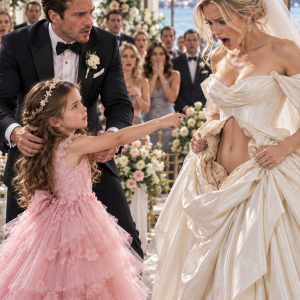
“DON’T MARRY HER, DAD! THAT BABY IS A LIE!” My Eight-Year-Old Daughter Screamed in Front of 150 Wedding Guests. My Bride Clutched Her Pregnant Belly and Yelled, “GET THAT GIRL AWAY FROM ME!” But When Emily Pulled Out a Silver Pin, Jessica’s Face Turned White. Seconds Later, Her Belly Deflated Beneath Her Wedding Gown. I Was Still Reeling When Emily Handed Me a Secret Recording About My First Wife’s Fatal Accident. Then She Whispered, “DADDY, YOUR BROTHER KNOWS WHAT REALLY HAPPENED.” I Turned Toward My Best Man—But His Chair Was Empty.
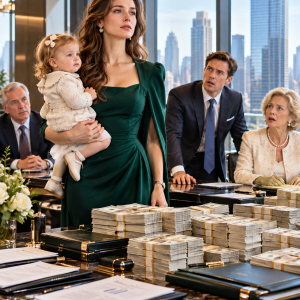
My Husband Froze My Cards While I Was Buying Formula for Our 9-Month-Old and Said, “Maybe Now You’ll Learn Who Actually Provides for This Family.” His Mother Called It a Lesson, and I Was Left Holding a $118.47 Grocery Bill I Couldn’t Pay. But the Next Morning, a Trustee Called About My Late Father—and Asked Me One Question That Could Change Who Really Controlled My Husband’s Company.
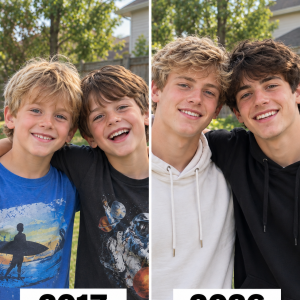
My 18-Year-Old Son Moved in With His Best Friend—Just Two Days Later, He Came Home in Tears. “Mom, Dad Lied to You About the Night I Was Born.” Then He Handed Me an Adoption Record Bearing My Name and a Signature I Had Never Written. My Husband Had Been Gone for Four Years, but the Secret He Kept for 18 Years Was Far Worse Than I Imagined. And When My Son Finally Told Me Who the Baby Was, I Realized I’d Been Welcoming Him Into Our Home for Years Without Ever Knowing the Truth